Short answer: no. You do not need a college degree to become an aircraft mechanic.
That surprises a lot of people, and honestly, it is one of the best-kept secrets in the skilled trades world. The aircraft mechanic degree requirements set by the FAA do not include a four-year university diploma anywhere on the list.
What you actually need is a specific technical certification, and the path to get there is more accessible than most people realize.
This matters because the misconception keeps qualified candidates out of the field.
If you have been putting off exploring this career because you thought a college degree was required, keep reading.
Let us get into what the FAA actually requires, what aviation mechanic schooling looks like, and why skipping a traditional university education does not mean skipping quality or career potential.
What Are the Official Aircraft Mechanic Degree Requirements?
The FAA does not require a college degree to earn your mechanic certificate.
What it requires is an Airman Certificate, specifically the Airframe and Powerplant (A&P) certificate.
Getting clear on the real aircraft mechanic degree requirements versus what most people assume is one of the most useful things you can do early in your career research.
According to the FAA official guidance on becoming a certificated mechanic, you can qualify by meeting one of these three conditions:
- Graduate from an FAA-approved Part 147 aviation maintenance technician school
- Accumulate 18 months of practical experience working on airframes or powerplants (30 months if you want both ratings)
- Complete military aircraft maintenance training that meets FAA standards
Notice what is not on that list. No bachelor degree.
No general education credits. No college GPA. The aircraft mechanic degree requirements are built entirely around demonstrated competency with actual aircraft, not academic credentials.
That is a meaningful distinction, and it makes this one of the most accessible technical careers in aviation.
What Is a Part 147 School, and Does It Count as College?
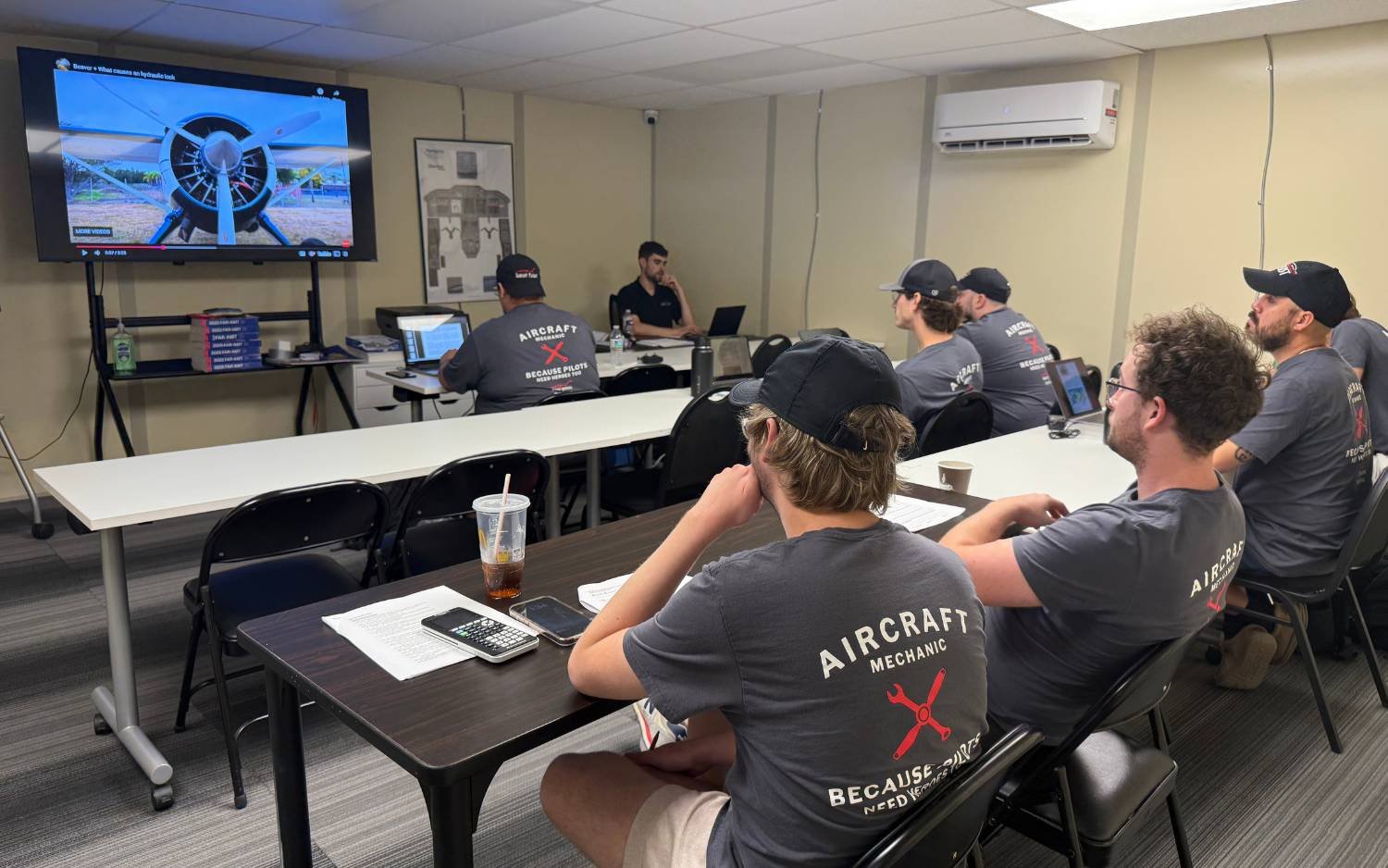
Part 147 schools are FAA-approved aviation maintenance technician schools that provide the structured training you need to sit for your A&P written, oral, and practical exams.
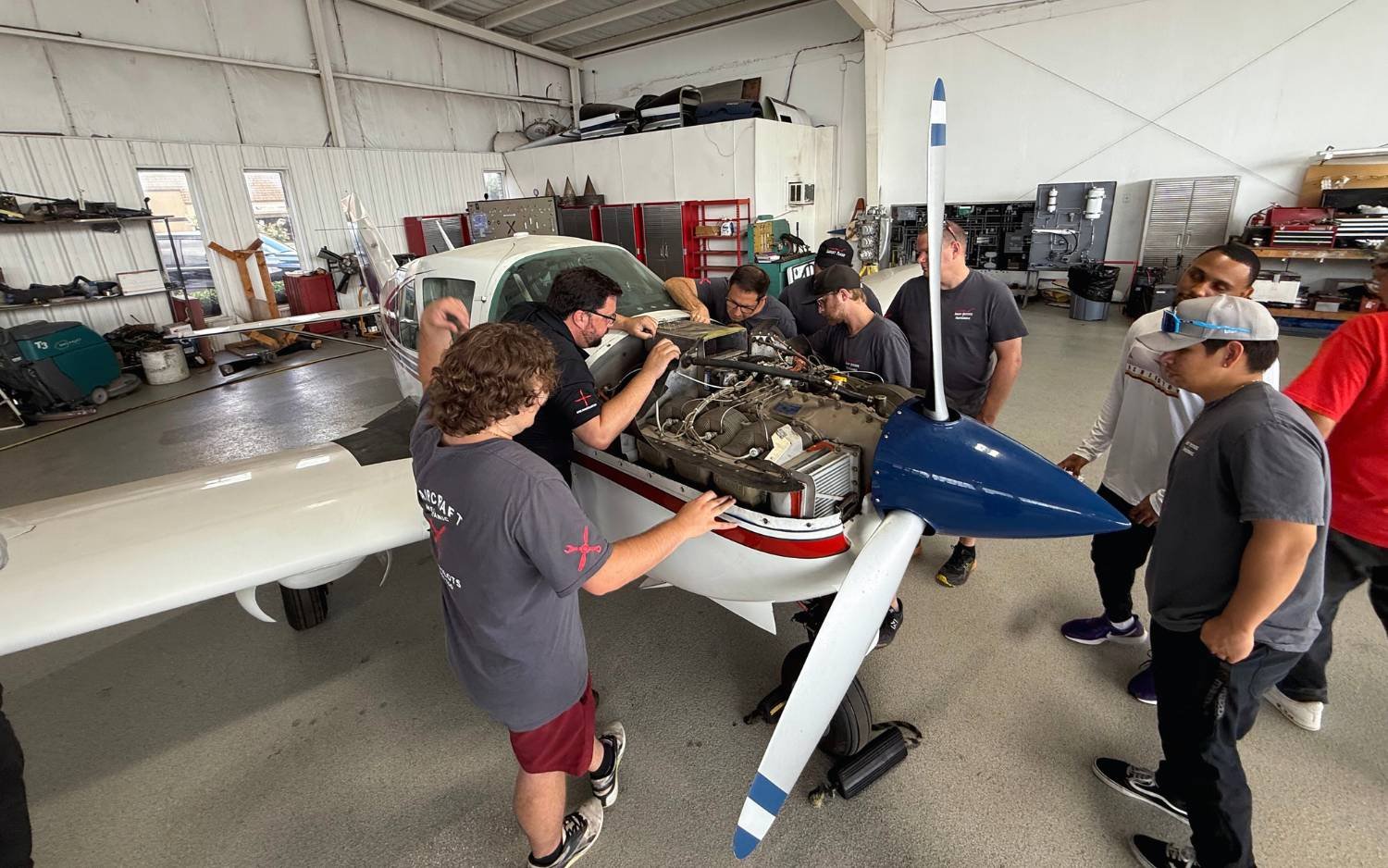
Most programs run between 18 and 24 months. The curriculum is dense and hands-on; you are learning to work on real aircraft systems from day one.
Some Part 147 programs operate through community colleges, and completing one might earn you an associate degree alongside your FAA certificate.
But the degree itself is not what qualifies you. The FAA-approved training hours are what count. A standalone aviation technical school with no college affiliation provides exactly the same qualification pathway.
Aviation mechanic schooling at a dedicated trade school fully satisfies all aircraft mechanic degree requirements from the FAA perspective.
You do not need to be enrolled in a degree-granting institution. You need to complete the right curriculum, log the required hours, and pass your exams.
If you are ready to explore programs, our aircraft mechanic school directory lists Part 147 programs across all 50 states, with filters for location, program length, and tuition range.
Do Airlines and MROs Actually Care About Degrees?
Even if the FAA does not require a degree, you might wonder if employers do. For entry-level AMT roles, the answer is generally no.
Airlines, MRO companies, and corporate aviation operators focus on three things when evaluating a mechanic: your A&P certificate, your hands-on experience, and your reliability.
The aircraft mechanic degree requirements that matter most to hiring managers are the FAA certification ones. A polished resume without an A&P will not get you far.
An A&P without a diploma gets you plenty of interviews.
That said, if you eventually want to move into management, engineering support, or FAA regulatory work, a degree can open doors later in your career.
But that is a separate conversation from the baseline aircraft mechanic degree requirements you need to get started. Right now, what matters is the certificate.
AMT Education Requirements: What You Actually Learn
The FAA mandates a detailed, hands-on curriculum for Part 147 programs. The AMT education requirements cover everything you will encounter on the job:
- Aircraft drawings, weight and balance, and fluid line systems
- Electrical systems and basic avionics
- Aircraft fuel and hydraulic systems
- Engine theory and powerplant maintenance
- Propeller systems and ground servicing procedures
- Sheet metal repair and structural inspection techniques
- FAA regulations, airworthiness standards, and maintenance documentation
This is technical education shaped by what you will actually do on the job every single day. The aircraft mechanic degree requirements the FAA has established are competency-based by design.
You are learning to safely maintain real aircraft, not to satisfy general education mandates. That focus is part of what makes this career so accessible to people from all kinds of educational backgrounds.
Can You Get an A&P License Without Any College?
Yes. Getting an A&P license without attending college is not only possible, it is common. There are two ways to do it.
The first is Part 147 school, which most people pursue. The second is the experience pathway: if you can document 18 months of practical aircraft maintenance experience (30 months for both A&P ratings), you can apply to take the FAA exams directly without attending formal school.
Many people pursue this route after working as a mechanic helper, through military service, or through informal apprenticeship arrangements.
The aircraft mechanic degree requirements for the experience pathway are straightforward: document your time on appropriate maintenance tasks, then pass the same written, oral, and practical exams that Part 147 graduates take. No transcripts required. No college admission process.
The challenge is finding and properly documenting qualifying experience.
For most people starting from scratch, a Part 147 program is the more reliable and faster route.
But the experience pathway reinforces the core point: aircraft mechanic degree requirements have nothing to do with college transcripts, at any stage of the process.
Airframe vs. Powerplant: Does the Rating Change Anything?
Your A&P certificate has two components. The Airframe (A) rating covers the structure of the aircraft: fuselage, wings, control surfaces, landing gear, and hydraulic systems.
The Powerplant (P) rating covers engines and related systems. Most mechanics hold both ratings, and most Part 147 programs prepare you for both simultaneously.
The aircraft mechanic degree requirements are identical for both ratings when it comes to the education question: no college degree is needed for either.
The difference shows up in the experience pathway, where you need 18 months for a single rating and 30 months for both. Part 147 school covers both within a single program, typically 18 to 24 months.
What If You Already Have a Degree?
If you are coming from a different field and already hold a bachelor degree, it can work in your favor when applying to competitive programs or certain employers.
Some MROs and airlines appreciate a broader educational background, especially for roles that blend technical and administrative responsibilities.
But your existing degree does not replace the A&P certification process.
The aircraft mechanic degree requirements from the FAA apply equally to everyone, regardless of prior education. You still need to complete Part 147 training or document qualifying experience, and you still need to pass the FAA exams.
A degree is a bonus, not a substitute for certification.
What About Career Advancement Later On?
Some mechanics pursue associate or bachelor degrees in aviation technology, business, or management once they are established in the field.
It can help if you want to move into an aviation maintenance manager or director role, transition to FAA regulatory work, or pursue quality assurance leadership positions.
But the reality is that most aircraft mechanics who advance to leadership do so on the strength of their A&P credentials and work history first.
The aircraft mechanic degree requirements for senior technical roles remain the same as entry-level: strong certifications and solid hands-on experience. Build that foundation first, and the rest follows.
Is Aviation Mechanic Schooling Expensive?
Part 147 tuition typically runs between $15,000 and $45,000 depending on the school, location, and program length. That is significantly less than a four-year college degree, and you will be working in your field within two years of starting.
Financial aid, VA benefits, workforce development grants, and employer tuition assistance programs can all reduce that cost. For a full breakdown of your options, check out our guide to financial aid for aviation mechanic students.
Summary: What Aircraft Mechanic Degree Requirements Actually Look Like
Here is the straight version of what you need and what you do not:
- No bachelor degree required
- No associate degree required (though some programs award one alongside your FAA certificate)
- No specific college coursework or entrance exams required
- You do need: a high school diploma or GED
- You do need: 18 to 24 months at a Part 147 school, or 18 to 30 months of documented practical experience
- You do need: to pass FAA written, oral, and practical exams for your A&P certificate
The aircraft mechanic degree requirements are about skill, certification, and demonstrated competency, not academic pedigree.
The path is clear, the timeline is reasonable, and it is one of the most direct routes into a technical career with strong pay, real job security, and a growing shortage of qualified workers driving demand.
Ready to Take the Next Step?
If you are serious about becoming an aircraft mechanic, start with our complete guide to becoming an aircraft mechanic. It walks through every step, from the basic prerequisites to passing your final practical exams, so you know exactly what you are getting into before you commit.
When you are ready to look at schools, our directory has Part 147 programs across the country. Browse by state, program length, and tuition to find the right fit for where you are and where you want to go.