
You don’t have to be a natural-born wrench-turner to succeed in aviation maintenance. But there are real skills needed to become a successful aircraft mechanic, and knowing what they are before you commit to school puts you way ahead of the curve.
Some of these skills are technical.
Others are about mindset.
A few are physical.
The best AMTs bring a mix of all three, and if you’re short on something from this list, that’s not a dealbreaker. Most of it can be learned, developed, or at least managed with the right awareness going in.
Here’s an honest look at what it takes.
Why the Right Skills Matter in Aviation Maintenance
Aircraft mechanics carry a level of responsibility you won’t find in most trades.
Every inspection you sign off on, every component you replace, every logbook entry you make goes into documentation the FAA can review.
A mistake that goes unnoticed can become a serious safety issue. That’s not meant to scare you off. It’s meant to explain why the skills needed for aircraft mechanic work go well beyond being able to turn a wrench.
You need to be technically sharp, yes.
But you also need to be methodical, detail-oriented, and comfortable working within a system of documented procedures. If you want a bigger-picture view of the job before diving into the skills breakdown, our overview of what aircraft mechanics actually do is a good place to start.
The Core Skills Needed for Aircraft Mechanics Success
1. Mechanical Aptitude
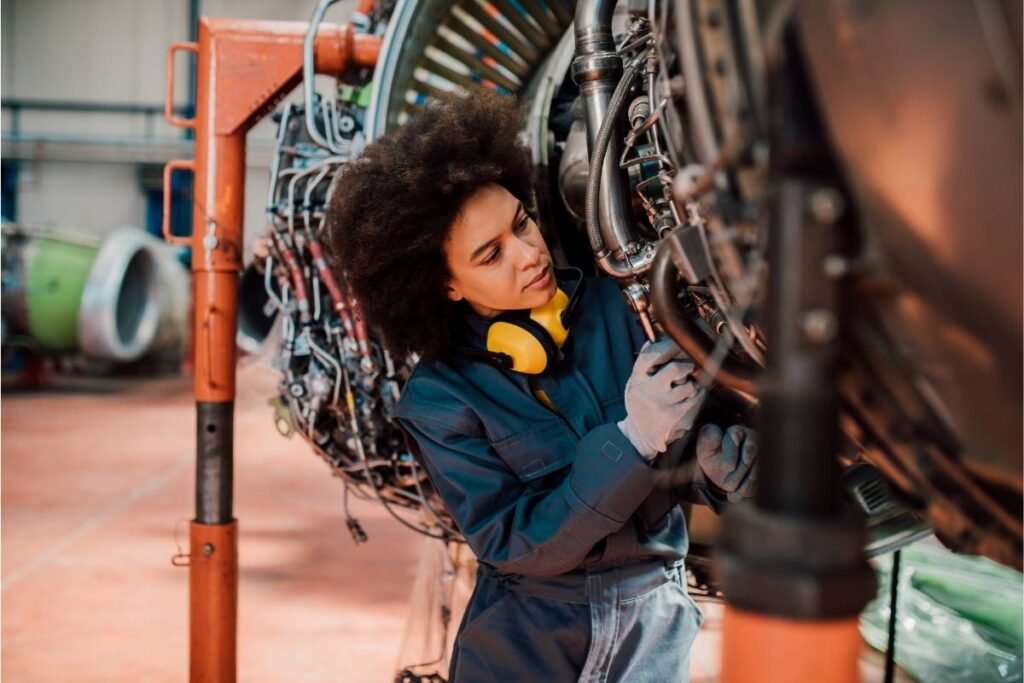
You don’t need to have rebuilt engines before starting school, but you do need to enjoy figuring out how mechanical systems work.
Comfort with tools, spatial reasoning, and an intuitive sense of how parts fit together are aircraft mechanic skills that help you pick up AMT coursework faster and perform better on the floor.
If you’ve ever fixed something around the house, helped a friend work on a car, or just liked taking things apart to see how they work, that instinct carries directly into aviation maintenance.
The skills needed by an aircraft mechanic build naturally on that kind of curiosity.
2. Attention to Detail
Among all the skills needed for aircraft mechanic work, attention to detail is probably the one employers mention most consistently.
Aircraft systems have tolerances measured in thousandths of an inch. Required inspections must follow specific sequences. Paperwork has to be completed correctly, every time.
This is about developing habits: checking your work, following procedures, not skipping steps even when you’re in a hurry. The aircraft mechanic aptitude for precision can be built if you don’t already have it, but you have to be willing to work at it.
3. Technical Reading and Documentation Skills
A large part of the job is reading.
Maintenance manuals, airworthiness directives, service bulletins, illustrated parts catalogs.
These documents are dense, highly specific, and safety-critical. Among the practical skills needed in aircraft mechanic roles, the ability to follow written instructions precisely and log your work in a way another mechanic can understand and rely on is non-negotiable.
If you’ve historically been the kind of person who skips the instructions and figures it out as you go, aviation maintenance will require you to change that habit. The procedures exist for good reason, and the documentation trail matters.
4. Math and Measurement
You don’t need calculus. But solid arithmetic, comfort with fractions and decimals, and the ability to handle measurement conversions are all part of the aircraft mechanic skills you’ll use regularly.
Weight and balance calculations, fuel load math, torque specifications, basic math shows up more than you might expect in this trade.
Brush up on the fundamentals before school if you’re rusty. It’ll make your first semester significantly smoother and take one stressor off your plate when coursework gets demanding.
5. Physical Stamina and Dexterity
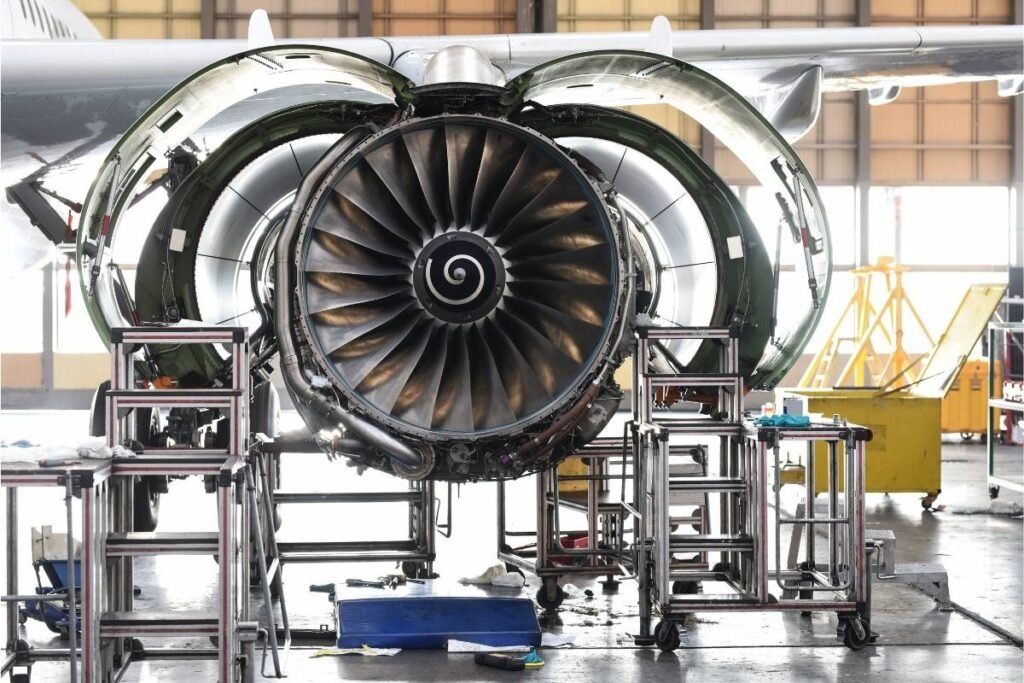
This is a physically demanding job. You’ll be on your feet for long shifts, working in tight spaces, lifting heavy components, climbing around aircraft, and doing precision work with your hands in awkward positions.
The skills needed for aircraft mechanic work aren’t purely mental. Your body is part of the equation, and it needs to hold up over a full shift, week after week.
Physical fitness helps, but it’s about durability more than athleticism. If you want a realistic picture of how shifts work, our piece on the aircraft mechanic work schedule covers shift structures, weekends, and what work-life balance actually looks like in this field.
6. Problem-Solving Under Pressure
Aircraft don’t always fail in obvious ways. Sometimes a plane comes in with a squawk that doesn’t match any single component fault.
You have to work through it systematically: review the maintenance history, consult the manual, run through the logic. Under time pressure, with an aircraft on the ground and a schedule slipping.
The skills needed to succeed as an aircraft mechanic include this kind of structured troubleshooting mindset. You don’t have to be fast at first.
You have to be methodical. Speed comes with experience, and experienced mechanics with strong diagnostic skills are in serious demand.
7. Communication Skills
You work on a team, and your work has to be communicated clearly. Shift handoffs. Discrepancy writeups. Talking through an issue with an inspector or a pilot.
Written logbook entries that another mechanic will rely on tomorrow, or five years from now.
Good aviation mechanic traits include clear, plain-language communication, both verbal and written.
This doesn’t mean you need to be a polished writer. It means you take documentation seriously and get comfortable explaining what you did and why, in terms someone else can follow without a translator.
8. Computer and Digital Literacy
Modern aircraft maintenance isn’t just wrenches and safety wire.
Avionics systems, digital maintenance tracking platforms, electronic manuals, fault code readers, comfort with computers is increasingly among the skills needed for aircraft mechanic positions, especially as the industry moves toward more data-driven maintenance programs.
You need to be comfortable learning new software and not freezing up when a procedure requires navigating a digital system or database. This skill gap trips up more candidates than people expect.
9. Time Management
Aircraft maintenance runs on schedules. AOG (aircraft on ground) situations are the most urgent, but routine maintenance has turnaround expectations too.
Learning to prioritize tasks, work efficiently without cutting corners, and communicate proactively when something is taking longer than expected are AMT qualifications that show up directly in performance reviews and career advancement.
The skills needed as an aircraft mechanic aren’t just about what you can do technically.
They’re also about how reliably you can do it within the constraints of real-world operations.
10. A Learning Mindset
The FAA doesn’t let you get stagnant. Regulations change, new aircraft systems come into service, and continuing education requirements exist for real reasons.
The best mechanics in the field stay curious, keep their training current, and embrace the fact that this career involves lifelong learning.
If you’re looking for a job where you learn a skill once and coast forever, aviation maintenance isn’t it. But if you like being challenged and staying sharp, that’s actually one of the things that makes this career satisfying over the long run.
An Honest Self-Assessment Before You Apply
Before you commit to a Part 147 school, it’s worth sitting with this list and asking yourself where you stand.
Not every candidate walking into AMT school has all the aircraft mechanic skills needed on day one. Most don’t. Knowing your gaps going in lets you prepare for them instead of being blindsided mid-semester.
There’s a useful gut-check in our article on whether an aircraft mechanic career is right for you, which looks at personality fit and lifestyle factors alongside the technical picture. It pairs well with this skills breakdown.
And for context on what the daily experience actually looks like once you’re working, the day in the life of an aircraft mechanic gives you a scene-based picture of a real shift from start to finish.
If you read both, you’ll have a much clearer sense of whether this field fits.
Skills Needed for Aircraft Mechanic Work: The Bottom Line
The skills needed to become a successful aircraft mechanic span both the technical and the personal: mechanical aptitude, attention to detail, technical reading, math comfort, physical stamina, problem-solving, communication, digital literacy, time management, and a commitment to continuous learning.
None of these are exotic. All of them are buildable.
You don’t need to arrive at school as a finished product. You need to arrive ready to learn, honest about your gaps, and committed to developing the habits and discipline the job demands.
According to the U.S. Bureau of Labor Statistics, employment of aircraft and avionics mechanics is projected to grow over the coming decade, with strong annual job openings driven by an aging workforce and rising air travel demand.
The industry needs people who show up with the right skills and the right mindset.
If you think this could be your path, browse the AMT school directory at AMT Registry to find accredited Part 147 programs near you and start comparing your options.