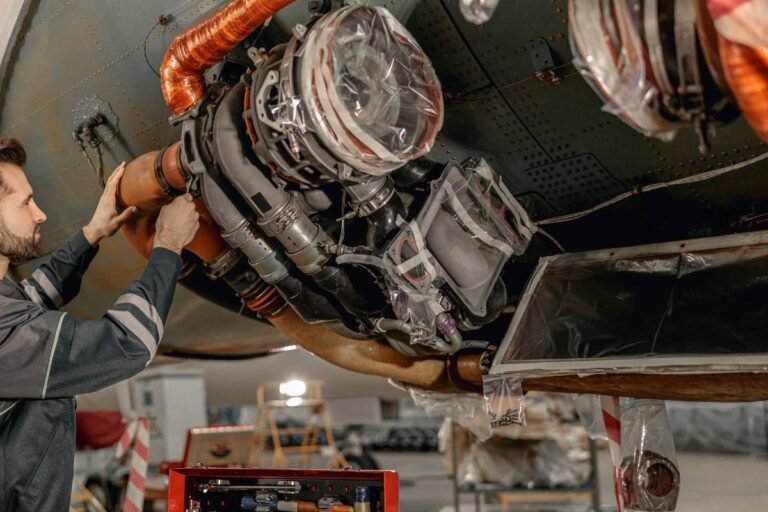
So you want to become an aircraft mechanic. Good choice. It’s one of the most hands-on, technically demanding, and genuinely rewarding careers in aviation, and the demand for qualified people isn’t going anywhere.
But the path to earning your FAA Airframe and Powerplant (A&P) certificate isn’t always obvious, especially if you’re coming at this fresh. This guide walks you through every step, from deciding on a school to getting your first job wrench-turning on real aircraft.
What Does an Aircraft Mechanic Actually Do?
Before we get into the how, let’s get clear on the what. An aircraft mechanic, officially called an Aviation Maintenance Technician, or AMT, inspects, repairs, and maintains aircraft to keep them airworthy. That covers everything from replacing worn hydraulic seals and troubleshooting avionics faults to performing scheduled 100-hour inspections and major structural repairs.
You can work on the airframe side (the structure, landing gear, flight controls, environmental systems), the powerplant side (engines, fuel systems, exhaust), or both if you hold a full A&P certificate. Most professionals aim for both.
The work happens in commercial MRO (maintenance, repair, and overhaul) shops, airline maintenance facilities, general aviation hangars, military contract depots, and corporate flight departments. Each environment is a little different, but the core skill set is the same.
Step 1: Meet the Basic Eligibility Requirements
The FAA sets the bar for who can sit the A&P exams. Here’s what you need before you can even apply:
- Age: You must be at least 18 years old to hold a certificate.
- Language: You must be able to read, write, speak, and understand English.
- Experience or Training: You need either 18 months of documented practical experience on airframes OR powerplants, or 30 months if you want to test for both simultaneously, OR you complete an FAA-approved aviation maintenance technician school (AMTS) program, which is by far the most common route.
The school path is what most people choose. It’s structured, documented, and designed to prepare you directly for the written, oral, and practical tests. Military training can also satisfy the experience requirement, if that’s your background, talk to an FAA Aviation Safety Inspector (ASI) about how your service records translate.
Step 2: Choose the Right AMT School
This decision shapes the next two-plus years of your life, so take it seriously. FAA-approved aviation maintenance technician schools are the standard pathway, and there are more than 150 of them across the country.
Programs typically run 18 to 24 months and involve a combination of classroom instruction and hands-on shop time. The FAA mandates a minimum of 1,900 training hours for a combined A&P program, but what separates good schools from great ones is how much of that time you spend actually doing the work, not just watching.
What to Look For in an AMT School
Accreditation and approvals. The school must hold FAA Part 147 approval. Beyond that, look for accreditation from AABI (the Aviation Accreditation Board International) and regional academic accreditation. Many schools also hold VA approval, which matters if you’re planning to use GI Bill benefits.
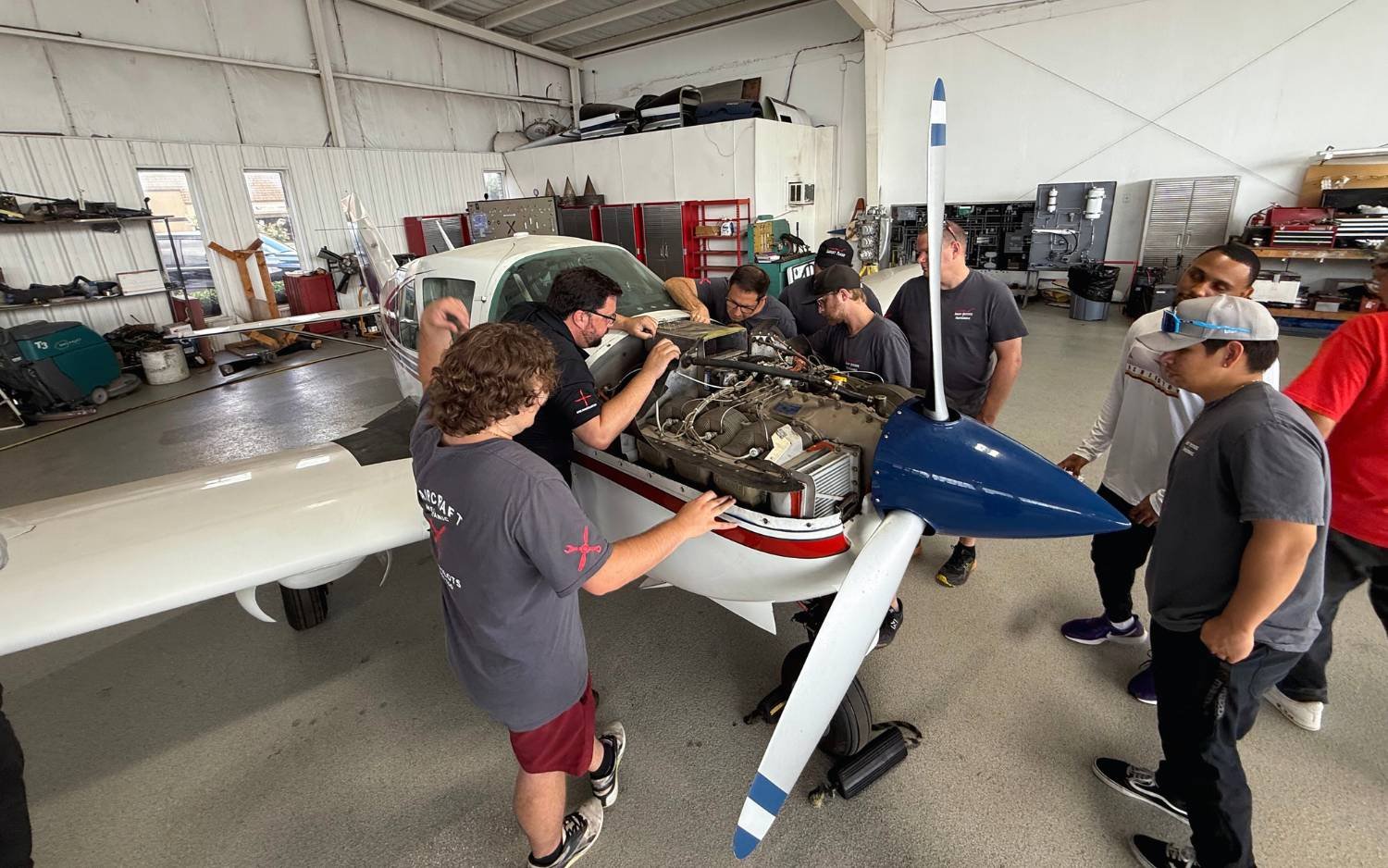
Hands-on shop time. Ask directly: how many of those 1,900 hours are spent working on actual aircraft versus sitting in a classroom? Programs that emphasize real shop work produce more job-ready graduates, full stop.
Aircraft and equipment. What does the maintenance hangar look like? Are students working on current equipment, or is everything from the era of leaded avgas? Schools with active industry partnerships tend to have newer training aircraft and current tooling.
Employer relationships and job placement. Ask whether the school has formal relationships with regional airlines, MRO facilities, or corporate aviation operators. On-campus recruiting, internship programs, and alumni networks all matter when it’s time to find your first job.
Total cost. Tuition for AMT programs ranges from roughly $20,000 at community college programs to $70,000 or more at private aviation schools. Always compare total program cost, including tools, materials fees, and living expenses, not just the headline tuition figure. Federal financial aid is available at accredited institutions.
Use AMT Registry’s school directory to explore programs by state and compare programs side by side. Whether you want to stay close to home or relocate for a program with strong employer connections, it’s a practical starting point for your search.
Step 3: Complete Your Training Program
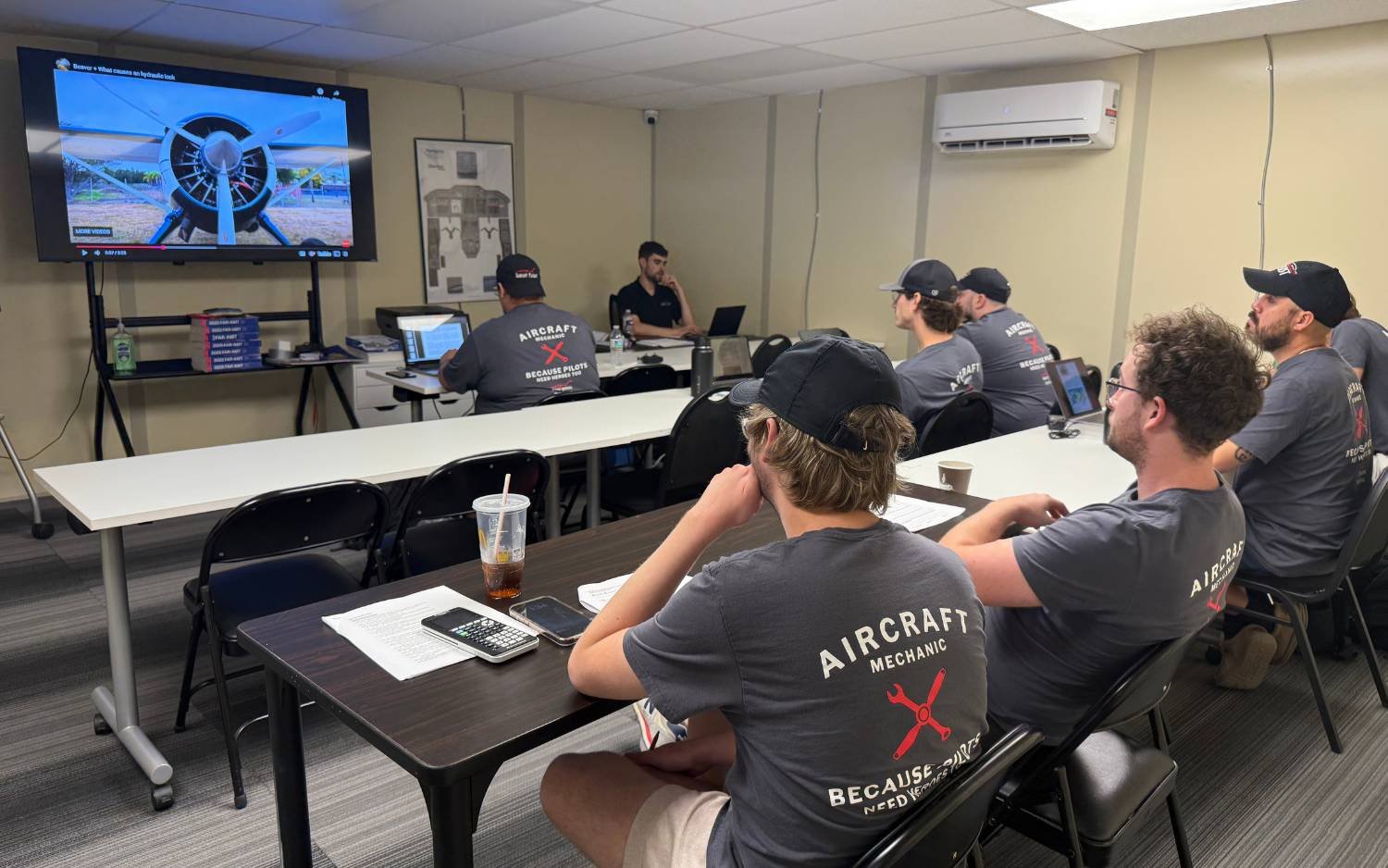
Once you’re enrolled, the work begins. A standard Part 147 program is organized into a General section covering maintenance fundamentals, regulations, weight and balance, and mathematics, followed by dedicated Airframe and Powerplant sections.
You’ll learn to read maintenance manuals and airworthiness directives, use precision measuring tools, perform non-destructive testing (NDT) techniques like dye penetrant and eddy current inspection, work with composite materials, splice and terminate aircraft wiring, and more.
The practical advice: treat every shop period like you’re working on a real aircraft. Because eventually, you will be. The habits you build in training follow you into your first job.
Step 4: Pass the FAA Written, Oral, and Practical Tests
To earn your A&P certificate, you’ll pass three separate tests for each rating, written, oral, and practical. That’s up to six total if you pursue both Airframe and Powerplant simultaneously.
Written Tests
Computer-based exams administered at FAA-approved testing centers. The material comes directly from FAA knowledge test guides and study materials your school will work through with you. Passing score is 70%. Most students also use dedicated test prep apps and practice question banks to drill the specific subject areas where they’re weakest.
Oral and Practical Tests
These are administered by an FAA Designated Mechanic Examiner (DME). The oral portion tests your knowledge, expect questions on regulations, procedures, and system-specific troubleshooting. The practical portion requires you to demonstrate actual skills: performing a rigging check, inspecting a hydraulic actuator, demonstrating proper torque sequences.
Your FAA-approved training documentation (Form 8610-2) is your ticket into the exam room. Keep your training records clean and complete throughout the program, the examiner uses them to verify your eligibility.
Step 5: Land Your First Job
With your A&P certificate in hand, you’re legally authorized to work as a certificated mechanic. Entry-level opportunities are spread across commercial aviation, general aviation, corporate flight departments, and the military contractor world.
Starting pay typically falls in the $22–$32/hour range, depending on location, employer, and the aircraft type you’re maintaining. The Bureau of Labor Statistics puts median annual wages for aircraft mechanics and service technicians in the $70,000–$75,000 range nationally, with experienced technicians at major airlines and large corporate operations earning well above that.
Beyond base pay, many employers offer shift differentials for night and weekend work, generous overtime opportunities, and benefits that can include travel privileges, which, if aviation is your calling, you’ll appreciate.
The job market is legitimately strong right now. The FAA and Aviation Technician Education Council (ATEC) have consistently projected a shortage of qualified AMTs as experienced mechanics retire. Airlines, MRO shops, and government contractors are competing actively for new certificated mechanics.
Step 6: Keep Growing
Your A&P is the foundation, not the finish line. Several paths open up as you build experience:
Inspection Authorization (IA). After three years holding an active A&P, you’re eligible to apply for an Inspection Authorization, the credential that allows you to perform annual inspections and approve aircraft for return to service after major repairs. For mechanics working in general aviation, it’s the logical next step.
Avionics specialization. Modern aircraft are increasingly software-defined. Mechanics who develop expertise in avionics, glass cockpit systems, autopilots, ADS-B, integrated flight management systems, are in high demand, particularly at corporate flight departments and larger MRO facilities.
Quality assurance and management. With experience, many mechanics move into QC inspector roles, maintenance planning, or shop supervision, positions that blend deep technical knowledge with organizational and leadership responsibilities.
Continued education. An A&P plus an associate’s or bachelor’s degree in aviation maintenance management or aerospace technology opens doors to engineering liaison roles, technical representative positions, and FAA designee appointments.
Ready to Take the First Step?
Becoming an aircraft mechanic takes real commitment, 18 to 24 months of focused training, followed by certification exams that test both your knowledge and your hands. But the career on the other side is stable, well-compensated, and the kind of work that matters.
If you’re ready to find the right program, explore AMT schools near you on AMT Registry. The directory lists FAA-approved programs across the country with details on program length, accreditation, and location, everything you need to start comparing your options.
The path to your A&P certificate starts with finding the right school. Start there.