Category: Aviation Maintenance Technician School

  • Mahoning County Career & Technical Center

    Mahoning County Career & Technical Center

    Mahoning County Career and Technical Center (MCCTC) offers an Aviation Maintenance program for high school students who want a direct path into hands-on aviation careers. Located in Canfield, Ohio, the program is built around the precision technical skills required in the aircraft maintenance field and is marketed as preparation for becoming an FAA-certified Airframe and Powerplant (A&P) technician. Students in the program develop a practical foundation in both airframe and powerplant work, with training that emphasizes industry standards and FAA-focused practices.

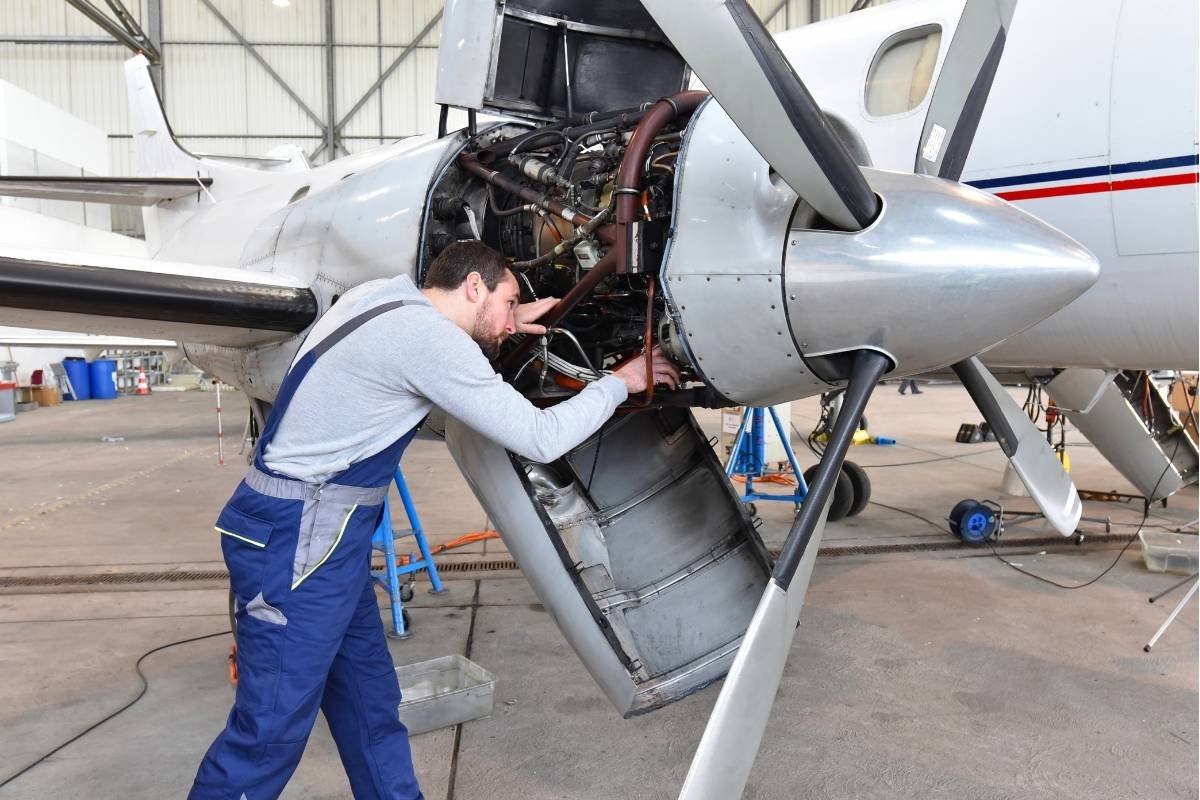
    Coursework and lab activities are centered on the kinds of tasks aviation maintenance professionals perform every day. Students learn airframe repair and maintenance, including sheet metal fabrication and techniques used to restore and replace structural components. They study hydraulics and pneumatics, which are critical for understanding landing gear, flight control actuation, and other aircraft systems. The program also includes aircraft inspection procedures, helping students build the habits and attention to detail expected in regulated maintenance environments. On the engine side, students explore engine performance diagnosis and the maintenance of aircraft powerplants, giving them exposure to troubleshooting, component service, and the logic of how systems operate together. Composite structure repair is also included, reflecting how common composite materials are in modern aircraft construction.

    MCCTC also positions the program as a college connection pathway. The school highlights higher education options in aviation technology, aeronautics, and aeronautical engineering, and notes that articulation agreements can help students earn college credit toward related degrees. That can matter for students who want to continue into a two-year or four-year program, or who want an A&P credential paired with a longer-term plan toward leadership, management, engineering support roles, or specialized maintenance tracks.

    Career outcomes are presented broadly across general and commercial aviation. Graduates are described as being prepared for roles such as an airframe and powerplant technician, airline technician, line technician, airframe specialist, and powerplant specialist. For students who enjoy working with tools, systems, and detailed procedures, the program offers a structured way to explore aviation maintenance while still in high school. The emphasis on real-world technical skills, inspection discipline, and exposure to both structures and engines makes this program a strong fit for students who want to keep America flying and enter the aviation ecosystem with momentum.

    Students who thrive in this environment are usually the ones who like structured problem-solving: read the manual, follow the procedure, verify the result, then document the work. That mindset is a big part of aviation maintenance culture, and MCCTC’s program messaging reinforces it through topics like inspection standards and system troubleshooting. For parents and students comparing options, the biggest advantage is starting earlier: two years of focused technical training can help a motivated student graduate with direction, industry vocabulary, and a clearer plan for pursuing A&P testing, additional schooling, or an entry-level role supporting maintenance operations.

  • National Aviation Academy Inc – New England

    National Aviation Academy Inc – New England

    National Aviation Academy (NAA) – New England is a career-focused aviation maintenance school that is built specifically to train future Airframe and Powerplant (A&P) technicians. NAA’s core Aviation Maintenance Technology (AMT) program is structured as an accelerated pathway that targets FAA eligibility requirements and prepares students for the written, oral, and practical exams that lead to A&P certification. On NAA’s program materials, the AMT program is positioned as a 14-month option with 2,000 clock hours and instruction across FAA-mandated subject areas that cover General, Airframe, and Powerplant content. Training is designed to be hands-on, combining classroom learning with shop and hangar work so students can practice real maintenance procedures in an environment intended to mirror industry workflows.

    The New England campus is based in Concord, Massachusetts and operates as a two-facility training setup. NAA describes classroom and administrative space at its Baker Avenue facility, with hangar/shop instruction occurring on the flight line at Minute Man Air Field. This kind of split-campus setup matters for prospective students because it signals that the program is intentionally built around practical maintenance training, not just lecture-based coursework. If you are comparing schools, a key differentiator is whether you will spend significant time working on real aircraft systems, using common maintenance tools, and completing structured lab exercises that build muscle memory for inspection, troubleshooting, repair, and documentation.

    NAA markets schedule flexibility through day and night class offerings in its broader program messaging, but also notes that night classes are currently offered at its Tampa Bay campus. For students considering New England specifically, it’s worth confirming the current cohort schedule with admissions so you can plan around work and family obligations. Another detail to validate during your admissions conversation is how NAA sequences the curriculum (for example, how General coursework transitions into Airframe and Powerplant blocks, and how test preparation is integrated throughout the program).

    Career outcomes are a central part of NAA’s value proposition. The school highlights a network of hiring employers and industry relationships and positions aviation maintenance as a high-demand field with long-term career stability. When you tour or speak with admissions, ask about job placement support, interview preparation, and the types of employers recruiting from the New England campus specifically. Also ask what tools and aircraft platforms you will train on, how often lab time occurs each week, and how attendance policies work, since FAA-hour requirements typically mean strict participation rules. Overall, NAA-New England is best suited for students who want a concentrated, aviation-only training environment with an accelerated timeline to A&P eligibility and a curriculum centered on shop and hangar experience.

  • Pittsburgh Institute of Aeronautics – Hagerstown

    Pittsburgh Institute of Aeronautics – Hagerstown

    Pittsburgh Institute of Aeronautics (PIA) – Hagerstown Branch Campus offers a focused Aviation Maintenance Technology (AMT) program designed to prepare students for the FAA Airframe and Powerplant (A&P) certification exams. For students who want a fast, trade-school style route into aircraft maintenance, the Hagerstown campus publishes an accelerated structure: AMT is listed as a 16-month diploma/certificate program delivered over 4 terms and totaling 1,900 clock hours. That hour count and structure are important because they indicate the program is built around FAA eligibility requirements and a high volume of hands-on training time, which is typically what employers expect from entry-level A&P candidates.

    PIA’s Hagerstown campus is located at 14516 Pennsylvania Avenue, Hagerstown, Maryland. This campus is part of PIA’s broader network (Pittsburgh, Hagerstown, Myrtle Beach, and Youngstown), and PIA emphasizes that its AMT curriculum is based on aviation industry practices, with training intended to be transferable into maintenance careers across airlines, MROs, and general aviation environments. When evaluating fit, students should ask how the program balances theory and lab/shop time, what aircraft systems and components are used for hands-on instruction, and how test preparation for written, oral, and practical exams is integrated throughout the 4-term sequence.

    One advantage PIA provides is transparent published tuition and fee information. For the 2025-2026 clock-hour program, PIA lists total AMT tuition at $29,520 (tuition only) for the full 1,900-hour program, along with estimated costs for books, tools, and supplies and standard school fees. PIA also explicitly lists the FAA A&P examination fees as a separate cost item, which is helpful for budgeting because many students underestimate the total certification testing expenses. For students starting after July 1, 2026, PIA notes that branch campuses are converting to a credit-hour model and provides a separate tuition schedule for that format as well.

    PIA’s campus pages also highlight student support and outcomes, including financial aid guidance and graduate placement reporting to its accreditor. During your admissions process, ask Hagerstown specifically about employer recruiting relationships in Maryland and the surrounding region, the types of first jobs graduates typically pursue, and whether PIA hosts hiring events or provides interview preparation support. Also ask about attendance expectations, lab safety policies, tool requirements, and how quickly a student can move from enrollment to their first day in the program since start dates can be a major factor in how soon you enter the workforce.

    Overall, PIA-Hagerstown is a strong option for students who want a shorter, accelerated AMT pathway with a clear 16-month structure, published costs, and a curriculum explicitly aimed at preparing graduates for FAA A&P certification exams.

  • School of Missionary Aviation Technology

    School of Missionary Aviation Technology

    The School of Missionary Aviation Technology (SMAT) in Ionia, Michigan offers a mission-driven, FAA Part 147 approved Airframe and Powerplant (A&P) maintenance training program designed to be completed in 12 months. SMAT is positioned for students who want a comprehensive technician skill set and who are drawn to a Christ-centered training environment with a strong missions orientation. The school emphasizes small class sizes, a low student-to-faculty ratio, and a warm community culture where students build relationships with instructors and peers while completing demanding technical training.

    SMAT’s A&P maintenance program is structured to prepare students for the FAA written, oral, and practical mechanic tests. The school highlights a learning model that is heavily hands-on, describing the program as roughly 60% lab and 40% lecture. That balance is significant for prospective students: it suggests students spend substantial time in applied projects and lab workstations, building the physical skills and troubleshooting habits that maintenance employers expect. SMAT also notes individual lab workstations and spacious facilities, along with hands-on projects and aircraft mockup systems, which supports repeat practice and skill refinement key ingredients for success in a condensed one-year timeline.

    From a curriculum perspective, SMAT publishes course-level visibility that mirrors the FAA’s three-part structure. General classes include fundamentals like electricity, drawings, weight and balance, fluid lines and fittings, materials and processes, ground operations and servicing, cleaning and corrosion control, regulations and maintenance records, physics, and human factors. Airframe coursework then expands into structures, welding, flight controls, rotorcraft fundamentals, inspection, landing gear, hydraulics and pneumatics, environmental systems, instruments, communications and lighting systems, fuel systems, and more. Powerplant instruction covers reciprocating engines, turbine engines and air systems, inspection, instrument systems, fire protection, electrical systems, lubrication, ignition and starting, fuel metering, induction and cooling, exhaust/reverse, and propellers. For students, this level of published transparency helps clarify what comprehensive means in practice.

    Cost and logistics matter with any private training program, and SMAT provides a clear baseline: the maintenance program tuition and lab fees are listed at $32,000, with additional costs for tools and FAA testing, and students are responsible for their own room and board. That straightforward pricing (plus published academic calendar details) can make budgeting easier than programs with hidden fees.

    SMAT can be a strong fit for students who want an accelerated, full-scope A&P pathway in a mission-oriented community, and who value structured, published curriculum detail alongside an intensive lab-heavy training approach. Prospective students should confirm start dates, expected weekly hours, and housing options in the Ionia area, especially if relocating for the 12-month program.

  • Sowela Technical Community College

    Sowela Technical Community College

    SOWELA Technical Community College’s Aviation Maintenance Technology program in Lake Charles, Louisiana is built as a hands-on, FAA-certificated training pathway designed to help students become employable aviation maintenance technicians and become eligible to test for FAA mechanic certification. SOWELA positions the program as a federally regulated aviation training school, certified by the Federal Aviation Administration, with training that covers the full set of knowledge and practical competencies in the General, Airframe, and Powerplant areas. Students who complete the training can pursue FAA Airframe & Powerplant certification, and SOWELA also notes that students may choose to test for Airframe or Powerplant certificates separately once training for those areas is complete.

    A differentiator for SOWELA is the program’s emphasis on learning by doing with substantial lab exposure and real aircraft and engine training assets. The program description highlights significant equipment and training resources such as a Boeing 727, multiple aircraft and helicopters, turbine engine trainers (including PT6), and larger commercial-engine training assets intended to give students experience that looks and feels like the work environment they’ll encounter in the field. That matters because aviation maintenance is not simply memorizing systems; it’s learning to apply procedures, interpret technical data, and execute precise work safely and consistently under inspection standards.

    From an academic structure standpoint, SOWELA offers multiple credential outcomes. Students completing the aviation maintenance training sequence earn a technical diploma (often referred to as a technical diploma or diploma pathway), and students can earn an Associate of Applied Science degree by completing the aviation maintenance technical coursework along with general education requirements. This gives students flexibility: some may want the fastest path to the hangar and later return for degree completion, while others prefer completing an associate degree before entering the workforce. The program’s course progression is organized across sequential terms that move from core maintenance foundations human factors, inspection concepts, math/physics, drawings, ground operations, materials and processes, corrosion control, weight and balance, documentation/regulations, and basic electricity into deeper airframe subjects (sheet metal, composites, assembly and rigging, hydraulics/pneumatics, landing gear, electrical/fire protection, instruments, and navigation/communications), then into powerplant topics such as reciprocating engines, turbine engines and APU, induction/airflow systems, exhaust and cooling, lubrication, engine electrical and instrumentation, ignition/starting, fuel metering, propellers/rotors, and engine inspection.

    SOWELA also notes a focus on employer alignment through an industry partner network that supports advising, internships, scholarships, and equipment support. For students, that can translate into clearer career pathways, more relevant training emphasis, and potential connections into hiring pipelines. If you are comparing programs, SOWELA is a strong candidate for students who want an FAA-aligned A&P track in Louisiana, prefer an equipment-rich training environment, and value the option to graduate with either a diploma (certificate-style outcome) or an Associate of Applied Science degree.

  • Texas State Technical College – Harlingen

    Texas State Technical College – Harlingen

    Texas State Technical College (TSTC) in Harlingen serves the Rio Grande Valley with aviation maintenance training that focuses on the two foundational FAA areas: aircraft structures and systems (airframe) and aircraft engines and related power systems (powerplant). Through its Aircraft Airframe and Aircraft Powerplant programs, TSTC gives students a clear pathway to build job-ready skills for aviation maintenance roles in general aviation, repair stations (MROs), and commercial aviation support environments. TSTC’s aviation messaging emphasizes that the curriculum is aligned to FAA expectations and designed for hands-on learning an important point for students who want to graduate able to perform inspections, repairs, and troubleshooting using real tools and standard maintenance documentation.

    At a high level, the airframe portion prepares students to work on the physical structure of the aircraft and the systems that keep it safe in flight. Students can expect training related to structural inspection, aircraft materials, fasteners, corrosion prevention and control, control surfaces, and aircraft systems that integrate into the airframe environment. The powerplant portion prepares students to work on engines and supporting systems. That typically includes engine theory, inspection procedures, servicing, troubleshooting, and repair concepts that translate into real maintenance tasks. Many students ultimately pursue both areas because the combination expands hiring options and supports long-term flexibility across different sectors of aviation.

    For scheduling, TSTC indicates a day-class format for its aviation programs, which generally works best for students who can commit to a consistent weekday routine. The airframe program is described as hybrid in format, while the powerplant program is described as in-person, so students should expect a blend of structured instruction and lab/hangar time depending on the plan. In a practical sense, the value proposition is straightforward: spend more time practicing, less time guessing, and move through a defined training sequence with faculty oversight.

    TSTC also offers both certificate and Associate of Applied Science (AAS) pathways for aviation, which matters for students trying to balance speed and credentials. A certificate can be a faster route into the workforce, while an AAS can add academic depth and may support advancement later especially if you pursue roles that value broader technical communication, troubleshooting documentation, or leadership responsibilities.

    If you are evaluating Harlingen, the strongest due-diligence questions are: what is the current completion timeline in months for your chosen plan, what weekly time blocks are required for labs, and what additional costs (tools, materials, exam prep) you should budget beyond tuition. You should also ask about local employer connections in South Texas and the Rio Grande Valley, since regional partnerships often influence internship opportunities and hiring pipelines for new graduates.

  • Utah State University

    Utah State University

    Utah State University (USU) provides an FAA-certified Aircraft Maintenance Technician (AMT) program that leads to an Associate of Applied Science degree. The program is distinguished by its 2,030 lab hours, ensuring students receive extensive hands-on experience in aircraft structures, propulsion systems, and advanced aerodynamics. Operating across multiple campuses, including Logan and Price, USU prepares students for the full range of FAA Airframe and Powerplant licensure exams. The curriculum also integrates computer literacy and management courses, providing a well-rounded foundation for career advancement into supervisory roles.

    Students at USU gain practical expertise in sheet metal fabrication, composite repair, and the troubleshooting of complex electrical and hydraulic systems. The program’s proximity to regional aviation centers allows for frequent interaction with industry professionals, helping students transition smoothly into the workforce. Graduates find success in diverse sectors, working as maintenance technicians for major airlines, corporate flight departments, and even government agencies like the FAA. By combining a traditional university experience with world-class technical training, Utah State remains a top destination for those seeking a professional career in aviation maintenance.

  • Aims Community College

    Aims Community College

    Aims Community College’s Aircraft Maintenance Technician (AMT) program is built for people who want a direct, hands-on path into the aviation and aerospace workforce, while still earning a college credential. The centerpiece is Aims’ Aircraft Maintenance Training Center (AMTC) in Greeley, Colorado a purpose-built aviation facility located at the Northern Colorado Regional Airport along the I-25 corridor. The AMTC was designed specifically for maintenance education, with aircraft repair hangars and live aircraft training opportunities, avionics/hydraulics/electronics testing labs, and dedicated shops for composites, brakes, tires, paint, parts, and more. The building also includes classrooms, faculty offices, student lounge and study areas, and a mezzanine catwalk that provides overhead visibility across the hangar floor.

    Academically, Aims offers the AMT pathway as an Associate of Applied Science (AAS). Students can pursue Airframe and Powerplant progress individually, or complete both to earn the A&P credential goal. The program is structured around a six-semester plan (about two years) and is intended to prepare students for FAA testing and licensure in airframes and powerplants. The airport-based training environment matters here: instead of learning maintenance topics in isolation, students work in the same type of space where real maintenance happens, practicing safe work habits, tool discipline, documentation practices, and troubleshooting routines that translate directly into entry-level jobs.

    Aims also makes it easier to plan financially by publishing tuition ranges by residency and describing estimated program-related costs. Like most A&P pathways, students should expect tuition to vary based on residency and to budget for additional items such as course materials, lab-related supplies, and testing fees. Prospective students can also connect directly with Aims’ enrollment and program contacts at the AMTC for questions about schedules, course sequencing, and how the Airframe/Powerplant steps fit together.

    From a career standpoint, Aims frames the AMTC as a response to strong demand for maintenance technicians. The program’s related updates highlight industry alignment and hiring momentum, including aviation employer connections such as a Frontier Airlines hiring pathway. For students, that career proximity can show up in multiple ways: exposure to current industry expectations, the chance to learn in a facility designed for modern maintenance training, and the credibility that comes from training in a dedicated aviation center rather than a generic lab environment.

    If you’re looking for an AMT program where hands-on is the daily reality not a marketing phrase Aims’ airport-based AMTC, AAS structure, and FAA-focused curriculum make it a strong option for building A&P readiness with real-world context.

  • Aviation Institute of Maintenance – Dallas

    Aviation Institute of Maintenance – Dallas

    The Aviation Institute of Maintenance (AIM) in Irving, Texas, serves the massive Dallas-Fort Worth aviation hub with an FAA-certified program focused on producing highly skilled A&P technicians. The campus features deep ties to the regional aerospace sector, which is home to some of the world’s largest airlines and maintenance providers. AIM Dallas offers a professional training environment where students work through a comprehensive curriculum that covers aircraft structures, systems, and performance, all designed to prepare them for the federal certification process.

    Students at the Dallas campus train in a professional hangar environment, gaining the hands-on proficiency required to troubleshoot and repair complex aircraft components. The program’s modular structure allows for a focused learning experience, while the dedicated career services team works to connect graduates with the thousands of aviation jobs in the DFW area. By focusing on the practical needs of the airline industry and the strict safety requirements of the FAA, AIM Dallas helps provide the critical talent pipeline needed to keep the region’s massive commercial and corporate fleets flying safely.

  • Blue Ridge Community College

    Blue Ridge Community College

    Blue Ridge Community College (BRCC) offers an FAA-approved Aviation Maintenance Technology program located at the Shenandoah Valley Regional Airport in Weyers Cave, Virginia. The program provides multiple pathways for students, including an Associate of Applied Science (AAS) degree and specialized certificates for Airframe and Powerplant ratings. By blending classroom instruction with immersive hands-on training on real-world aircraft, BRCC ensures its graduates possess the deep technical knowledge required to maintain, troubleshoot, and repair complex aerospace systems.

    The curriculum covers a broad range of FAA-required subjects, from basic electricity and aerodynamics to advanced turbine engine overhaul and composite structure repair. Students benefit from the program’s location at an active airport, providing them with a realistic understanding of professional maintenance environments. BRCC also offers flexible learning options, including distance learning components for theoretical coursework, allowing students to balance their technical training with other commitments. Graduates leave the program fully prepared for the FAA licensure exams, ready to enter careers with commercial airlines, general aviation operators, and government agencies.