
Pensacola State College
Details
Description
Pensacola State College (PSC) offers aviation maintenance training through separate vocational certificate pathways in Aviation Airframe Mechanics and Aviation Powerplant Mechanics. Each certificate is designed as a 1,350 clock-hour program, and PSC presents the curriculum as a combination of theoretical knowledge and practical laboratory training that satisfies FAA eligibility requirements for testing. This structure is especially helpful for students who want a clear, modular path: you can pursue the airframe rating, the powerplant rating, or complete both over time to earn the full A&P. citeturn22search0turn22search1
PSC makes the program structure easy to understand because the published program pages outline the full certificate requirements and term breakdown. Students begin with “General” coursework (often presented as two general terms), then continue into rating-specific training. That sequencing matches how FAA mechanic certification works: the General subjects are foundational for either rating, and then you build the specialized competencies needed for Airframe or Powerplant testing. citeturn22search0turn22search1
For timeline planning, PSC indicates that the full certificate is designed to be completed in 1,350 clock hours, and its program listings describe completion in 3 semesters for full-time students. Converting that to a standard timeline, 3 semesters is typically about 12 months for a full-time schedule, though the exact calendar can vary by term start dates and course sequencing. citeturn22search3turn22search0
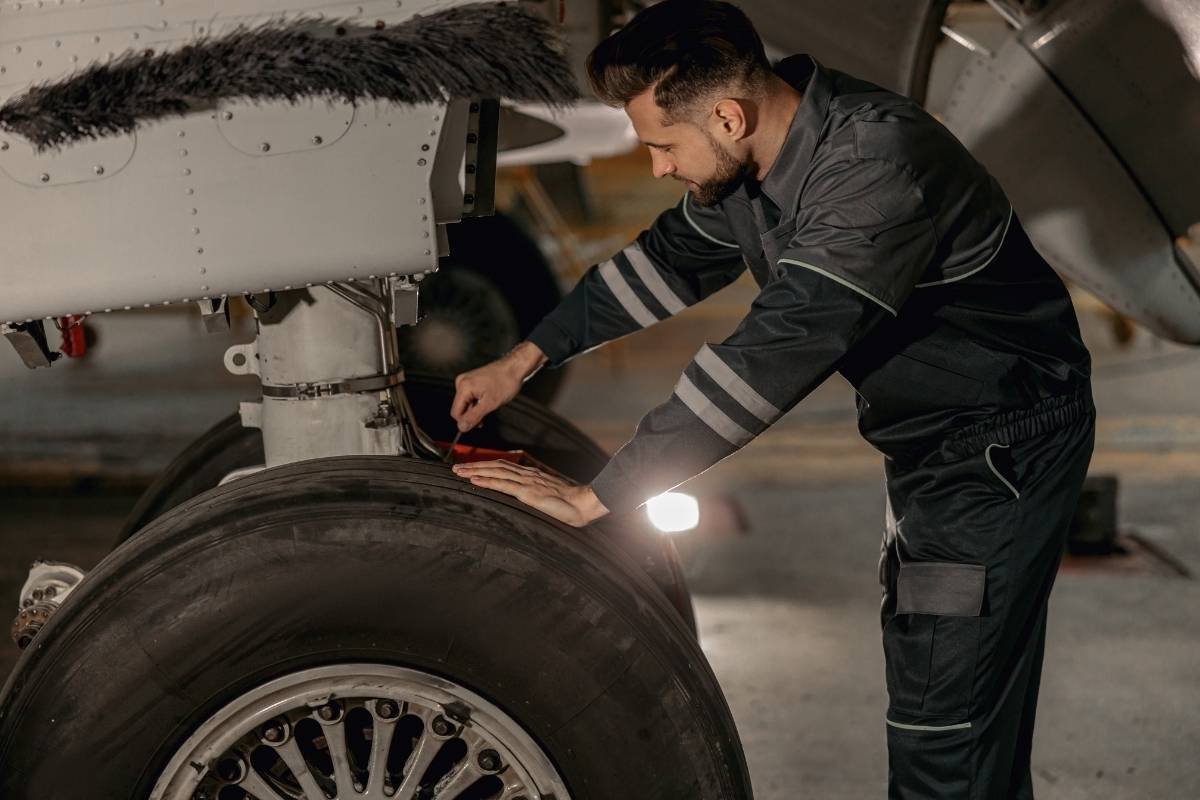
What does that training look like in practice? In an airframe-focused pathway you should expect concentrated work on structures, inspection, flight controls, landing gear/brakes, hydraulics, electrical basics, and aircraft systems. In the powerplant pathway you’ll focus more on engine theory and maintenance for reciprocating and turbine engines, fuel and ignition systems, propellers, troubleshooting logic, and precision measurement. In both cases, the “hands-on” portion is not an add-on-it’s central to becoming employable. Employers want graduates who can work safely, follow maintenance manuals, use proper hardware and safetying techniques, and document work in a way that meets aviation standards.
PSC is also actively investing in the program. The college has publicized significant support and facility development for its aviation airframe and powerplant mechanics training, signaling that aviation maintenance is a strategic workforce priority for the institution. citeturn22search4
PSC is a strong fit for students who want a clear, semester-based structure and the option to pursue Airframe and Powerplant as distinct certificates. When comparing options, your most important checklist items are (1) confirming the pathway to both ratings if your end goal is A&P, (2) understanding whether you’ll attend full-time or part-time and how that changes completion time, and (3) verifying where labs are held and what aircraft and equipment you’ll train on. With those details in hand, PSC can be a practical entry point into aviation maintenance careers in Northwest Florida.