Category: Aviation Maintenance Technician School

  • Chennault Aviation Maintenance Academy

    Chennault Aviation Maintenance Academy

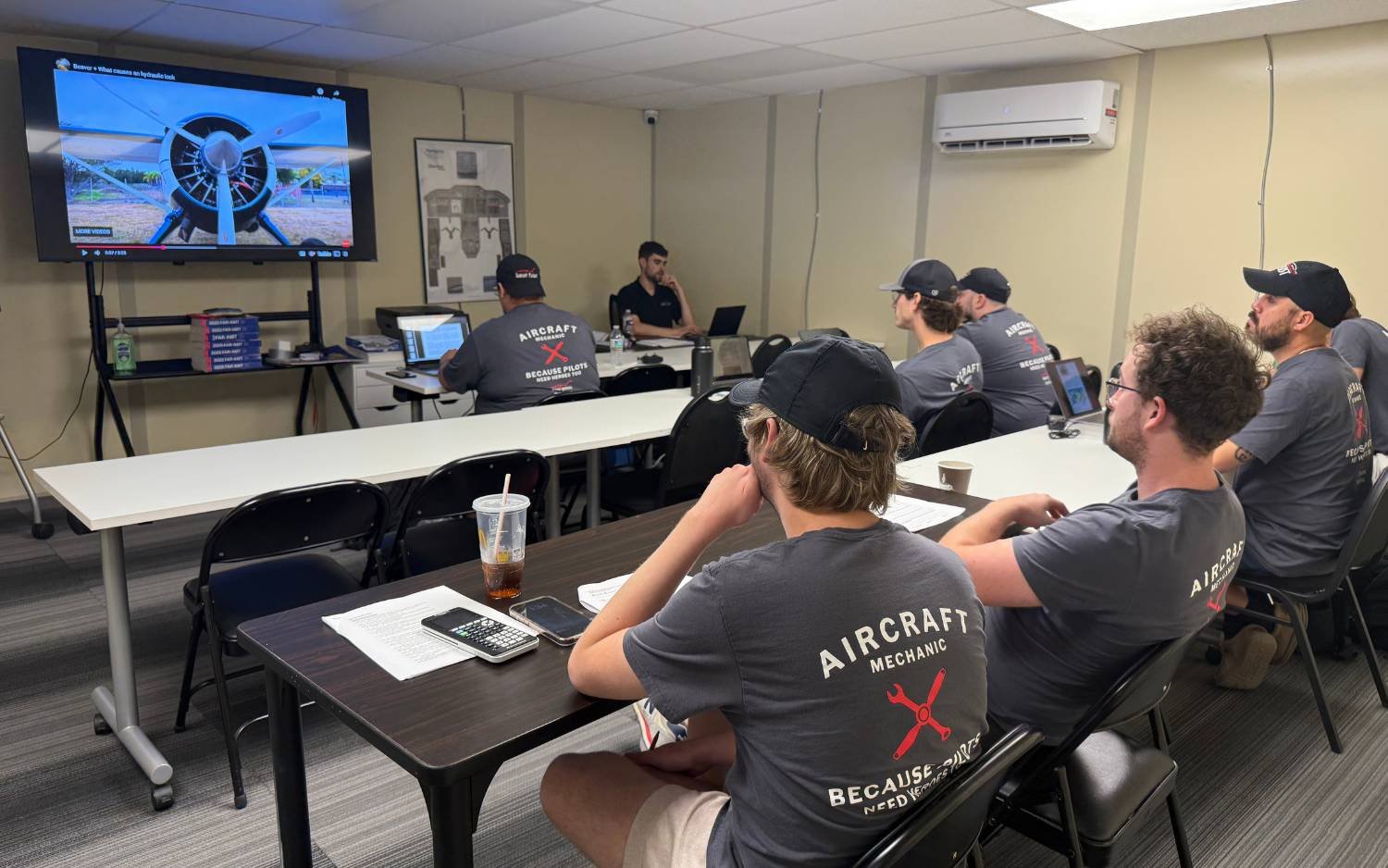
    Chennault Aviation Maintenance Academy in Conroe, Texas positions its A&P pathway as a modern, student-focused way to become an FAA-certificated aircraft mechanic. Located on an active airfield environment, the academy blends maintenance training with a larger aviation ecosystem that includes flight training and aircraft services. For a prospective student, that matters because it places you around aircraft activity and aviation professionals daily the same context you’ll encounter in a maintenance career, whether you work general aviation, corporate, or airline-adjacent roles later on.

    The academy offers an FAA Part 147 aviation maintenance school pathway aimed at helping students earn Airframe & Powerplant (A&P) eligibility. Training is delivered with a strong emphasis on hands-on development: learning by inspecting, disassembling, troubleshooting, repairing, and documenting work the way a real maintenance shop expects. While every Part 147 program is built to meet FAA subject area requirements, schools vary widely in how effectively they translate that content into I can do this on the floor confidence. Chennault’s messaging emphasizes structured instruction, small group support, and practical skill-building, which can be especially important if you’re a career changer or if you learn best by doing rather than by reading manuals alone.

    One thing Chennault highlights directly is outcomes. The academy reports a 93% pass rate on its maintenance program an important signal for anyone evaluating whether the training environment is aligned with FAA testing expectations. In addition, the broader Chennault organization includes aircraft services and an operating airfield context, which can create network proximity for students: you’re training in the same environment where aviation work is happening, rather than in a detached classroom setting.

    Financing and accessibility are also part of the student experience, and Chennault offers an entry point for people who want to begin the enrollment process and discuss funding options. Many prospective A&P students are balancing work and family, so clarity around timelines, costs, and training cadence matters. While program costs may vary and should be confirmed with admissions, the academy provides direct contact channels and encourages prospective students to request program and finance information before committing.

    The best-fit student for Chennault is someone who wants a dedicated maintenance academy atmosphere with strong FAA alignment, prefers hands-on learning, and values being trained in an active aviation environment. If you want to build the habits that matter in maintenance precision, documentation discipline, safety-first thinking, and the ability to troubleshoot under pressure Chennault’s A&P-focused academy is designed to develop those skills and move you toward certification and entry-level employability.

  • Dutchess Community College

    Dutchess Community College

    Dutchess Community College (DCC) offers an elite FAA Part 147 approved Aviation Maintenance program based at its state-of-the-art Aviation Education Center at the Hudson Valley Regional Airport. The program provides multiple pathways, including an intensive 12-month certificate and a 20-month Associate of Applied Science degree. DCC is known for its small cohort sizes and its professional hangar facility, which houses an impressive training fleet that includes a Gulfstream G3 jet and Robinson helicopters.

    The training at DCC focuses on the immediate practical skills required for the aircraft maintenance industry, with modules covering structural sheet metal, reciprocating engine performance, and advanced avionics systems. Students spend 40 hours a week in a professional learning environment that mirrors the expectations of the flight line. This immersive approach has led to high success for DCC graduates, who are frequently recruited by major airlines and corporate flight departments before they even complete their studies. By providing top-tier technical training in the heart of the Hudson Valley, DCC remains a primary provider of talent for the Northeast aerospace corridor.

  • Great Oaks Joint Vocational School

    Great Oaks Joint Vocational School

    The Laurel Oaks Career Campus of Great Oaks provides a premier Aviation Maintenance Technician program in Wilmington, Ohio, that serves as a vital training hub for the regional aerospace industry. This FAA-approved program is designed to equip students with the comprehensive skills needed to maintain, repair, and overhaul complex aircraft systems, ranging from traditional piston-powered planes to modern jumbo jets. Through a unique partnership with Southern State Community College, students can also pursue an Associate degree while gaining credit for their technical training.

    The curriculum at Laurel Oaks covers a wide range of critical topics, including airframe structures, advanced hydraulics, avionics systems, and basic aerospace welding. Students gain significant experience in a professional hangar environment, working with materials like wood, metal, aluminum, and advanced carbon fiber composites. The program emphasizes both technical execution and aircraft ground handling safety, ensuring that graduates are prepared for the high-accountability world of aircraft maintenance. Many graduates from Laurel Oaks successfully transition into roles at certified repair stations, major air freight companies, or pursue specialized military aviation careers.

  • Jefferson Community and Technical College

    Jefferson Community and Technical College

    Jefferson Community and Technical College (JCTC), part of the Kentucky Community & Technical College System, offers an Aviation Maintenance Technology program designed to prepare students for aircraft maintenance careers and FAA testing eligibility. JCTC’s program is FAA-certified and focuses on the inspection, repair, service, and overhaul of aircraft and engines. For students seeking a structured, community-college pathway to an A&P career, JCTC provides a clear two-year plan with credential milestones along the way.

    One of the most helpful details JCTC publishes is program length: the core AMT sequence is designed to be completed in four semesters (two years) when taking a full-time course load. As students progress, they can earn completion certificates that align with FAA subject areas (general, airframe, and powerplant), which supports an incremental approach to building credentials. Students can also pursue an Associate of Applied Science (AAS) in Aviation Maintenance Technology by adding general education requirements-often still achievable within the same two-year window if planned carefully.

    JCTC frames aviation maintenance as a profession where integrity and attention to detail are essential. That emphasis matters because employers rely on technicians to follow approved data, document work accurately, and maintain compliance habits that directly impact flight safety. In training, students should expect a combination of classroom instruction, lab work, and repeated practice with technical procedures, systems understanding, and tool use. The program also references the importance of attendance and grading standards typical of FAA-aligned education.

    Admissions into AMT programs can be more structured than many other community-college majors. JCTC uses a selective admissions process and provides a program coordinator contact for prospective students. Before applying, students should review the current selective admissions document, confirm prerequisite expectations (including any computer literacy requirements or testing options), and attend an information session if offered. Those steps can prevent surprises and help you plan for the pace and expectations of the program.

    Location and logistics are also important for students balancing work and family. JCTC provides program contact information, and prospective students should ask directly about typical weekly schedules, daily lab hours, and any required equipment or tool purchasing policies. It’s also smart to ask about industry connections, employer relationships, and how the school supports career placement.

    Overall, JCTC is a strong option for students who want a two-year community-college route toward A&P eligibility, prefer a program with clearly stated completion planning, and value the structure and support of a KCTCS program with defined admissions steps and dedicated program coordination.

  • Lorenzo Walker Technical College

    Lorenzo Walker Technical College

    Lorenzo Walker Technical College (LWTC) in Naples, Florida offers FAA-aligned aircraft maintenance training through separate Aviation Airframe Mechanics and Aviation Powerplant Mechanics career certificate programs. Each program is designed to prepare students for its corresponding FAA certification exam, and the school frames the pathway clearly: earn the Airframe or Powerplant credential first, then add the other rating to qualify for the full Airframe & Powerplant (A&P) certificate. For students who like a modular approach complete one rating, start working, and return for the second rating LWTC’s structure supports that planning.

    On the program pages, LWTC emphasizes hands-on learning and the real-world systems mechanics work on. The Powerplant program description highlights piston and turbine engines, fuel and ignition systems, propellers, and troubleshooting methods that align with FAA standards and the precision expected in aviation environments. The Airframe program focuses on the aircraft’s physical structure and key airframe systems such as landing gear, hydraulics, flight controls, and environmental systems, again positioned as training that blends classroom learning with hangar-style practice.

    Both programs list a 1,350-hour length, which communicates the intensity and depth of training. LWTC also includes career opportunities and career pathways sections that connect training to roles in maintenance, repair and overhaul (MRO), line maintenance, quality control, and advancement tracks such as Inspector Authorization (IA) and maintenance management over time. Those details are valuable for prospective students who want to understand how an entry-level certificate can translate into long-term career growth.

    Another practical strength is accessibility to people and support. Each program page provides contact options, including instructor contact details and a workforce education advisor for adult students, plus the college’s main phone numbers and campus address. That makes it easier for applicants to validate start dates, discuss prerequisites, and ask about financial aid and enrollment processes without hunting through a large district website.

    LWTC’s programs are a strong fit for students in Southwest Florida who want FAA-focused, high-hour training in a technical college environment with clear career messaging and accessible contacts. If your goal is to become an A&P, LWTC’s approach of earning one rating and then adding the second provides a straightforward map from training to FAA testing and employment in aviation maintenance. Prospective students should confirm current cohort start dates and daily schedules directly with the advisor listed on the program pages, since the site notes start dates may be listed as TBD depending on enrollment cycles.

  • Nashua Community College

    Nashua Community College

    Nashua Community College (NCC) in Nashua, New Hampshire offers an Aviation Technology program designed to prepare students for professional careers in aviation maintenance and related aviation operations. Located at 505 Amherst Street, Nashua, NH 03063, NCC provides a community-college environment that can be a good fit for students who want a college-based pathway, access to student services, and the ability to combine technical training with broader academic coursework.

    NCC’s aviation program is positioned as preparation for work in aviation maintenance, with outcomes that support employment with airlines, fixed base operators, or aircraft manufacturers. For students comparing AMT schools, this maintenance-first orientation is important: you want a program that teaches both the technical fundamentals and the professional habits required in regulated maintenance environments. The curriculum is built to develop competence in maintenance on aircraft structures and powerplants, along with inspection and repair skills that are central to aircraft airworthiness. Students can expect learning to be a blend of classroom instruction and lab-based practice where they apply procedures, learn safety standards, and become familiar with the technical documentation and troubleshooting approach that maintenance shops rely on.

    One practical advantage is that NCC publishes program cost guidance for students to plan financially. In its program materials, NCC includes an estimated tuition-and-fees cost and also calls out additional expenses such as tools, which are common in AMT training. This is useful for students who want a realistic picture of total out-of-pocket costs and who are comparing public college options against private, accelerated schools.

    Credential-wise, NCC offers a degree pathway in Aviation Technology and also lists certificate options. In this dataset, the credential is standardized as an associate-level pathway so you can compare degree-style programs consistently across schools. Students considering an associate route often value the combination of technical skill development with general education coursework that can support advancement later (for example, moving into leadership, quality, training, or continuing toward a bachelor’s degree). If you are a student who may want transfer options or broader academic flexibility in addition to A&P-oriented technical outcomes, a college program can be a strong match.

    Schedules in college environments can vary by term, course sequence, and lab availability, so prospective students should confirm current class days/times, the expected program plan by semester, and how the program supports FAA testing eligibility. NCC provides program contacts and a main college phone line for prospective student questions. Overall, Nashua Community College is a solid option for students in New Hampshire and northern New England who want an aviation maintenance-focused college program, published cost transparency, and a campus-based learning environment that supports both technical growth and longer-term career development.

  • Pierpont Community and Technical College

    Pierpont Community and Technical College

    Pierpont Community & Technical College offers an Aviation Maintenance Technology (AMT) associate degree program in north-central West Virginia, built to prepare students for FAA Part 147 testing and entry-level aircraft maintenance careers. The program is housed at the Robert C. Byrd Aviation Center (also referred to by the college as the Robert C. Byrd National Aerospace Education Center), located at the North Central West Virginia Airport in Bridgeport. That setting is a meaningful advantage for students: an airport-based training environment typically provides better access to aircraft, tooling, and maintenance workflows than a general classroom facility, and it helps students connect what they’re learning to real aviation operations.

    On Pierpont’s program overview, the AMT curriculum is described as hands-on training in aircraft technology. Students learn to perform maintenance, remove and replace components, troubleshoot, and repair aircraft systems. Pierpont also emphasizes problem-solving and analysis developing plans to diagnose aircraft issues using approved maintenance materials. Those points matter because employers consistently look for technicians who can do more than follow a checklist; they want mechanics who understand the why behind a system, can recognize abnormal conditions, and can document work correctly. The program’s stated outcome is that graduates are qualified to take FAA Part 147 tests, which aligns directly with the pathway to earning Airframe and Powerplant (A&P) certification.

    Because Pierpont offers AMT as an associate-degree program, it can be a strong fit for students who want both the FAA-aligned maintenance training and the long-term value of a college credential. A degree can also help if you later pursue roles like lead mechanic, inspector, maintenance planner, or maintenance management, where additional academic credentials may be helpful. Pierpont also references stackable options, listing related certificates such as Airframe Technology and Avionics in its catalog useful if a student wants to build skills in a specific direction or add a focused credential.

    Pierpont highlights local employment relevance and names regional industry employers such as Mitsubishi and Pratt & Whitney as examples of job opportunities in the area. If you’re comparing schools, that’s a cue to ask about local hiring pipelines, career fairs, and the types of roles graduates typically take immediately after completion. You should also ask how Pierpont integrates FAA test preparation into the program (written, oral, and practical readiness) and what kind of lab time you can expect each week, since that is often the biggest determinant of skill confidence at graduation.

    Admissions-wise, Pierpont notes that the college is open enrollment, and that a standard Pierpont application is required. Prospective students should still confirm any program-specific onboarding steps at the Aviation Center (tool lists, lab safety requirements, drug/background policies if applicable, and cohort start timing). Overall, Pierpont is a compelling option for students who want a public-college AMT pathway, airport-based training at the Robert C. Byrd Aviation Center, and a direct focus on FAA Part 147 testing readiness and practical maintenance competencies.

  • San Joaquin Valley College

    San Joaquin Valley College

    San Joaquin Valley College (SJVC) delivers Aviation Maintenance Technology (AMT) training at its Fresno Trades Education Center in Fresno, California. The program is explicitly aligned with FAA requirements: SJVC states that graduates of the AMT program are eligible to test for an Airframe and Powerplant (A&P) license through the Federal Aviation Administration, and that the program is approved by the FAA. This makes SJVC’s Fresno AMT program a practical option for students in California’s Central Valley who want a structured, school-based pathway toward A&P testing eligibility.

    SJVC frames the program as skills-forward and career-focused. Students can expect training that blends aircraft maintenance theory with hands-on application across common maintenance domains. The Fresno campus overview describes topic coverage including turbine/jet engine systems, propeller and engine systems, basic electricity and electronics, and aircraft engine and airframe repair. That mix is important because modern maintenance roles require technicians who are comfortable moving between mechanical systems, electrical troubleshooting fundamentals, and maintenance documentation processes. In other words, the program is aimed at producing technicians who can step into entry-level hangar or line maintenance environments and continue building competence under supervision.

    Program length at SJVC can vary by campus and credential level, and SJVC emphasizes flexible learning options. On the Fresno Trades Education Center page, SJVC notes that in as little as 17 months, students could earn a Certificate of Completion. Students comparing schools should pay attention to that as little as wording actual completion time can be influenced by scheduling, course availability, and individual progress. SJVC also directs prospective students to a net price calculator and the academic catalog for campus-specific cost information, and encourages applicants to speak with admissions and financial aid representatives to map out a realistic payment plan.

    One of the most distinctive features called out for the Fresno campus is the availability of an apprentice-style opportunity tied to a major regional airline. SJVC notes an Apprentice Program partnership with SkyWest Airlines that is designed to help students prepare for mechanic roles while enrolled. For the right student, that kind of relationship can provide early exposure to airline maintenance standards, professional expectations, and potential employment pathways. It also signals that the school is actively engaging with employers that hire A&P mechanics.

    SJVC’s program and campus environment may be a good fit for students who want an FAA-approved AMT program in a dedicated trades-focused setting, prefer to train in Fresno rather than relocating, and value an employer-connected option like an apprentice program. Prospective students should confirm the exact credential they plan to complete at the Fresno campus (certificate versus any additional credential options), verify the current estimated completion timeline for their cohort, and ask about tool requirements, FAA testing preparation support, and typical daily class hours.

  • Southwest Texas College

    Southwest Texas College

    Southwest Texas College (SWTX) offers aviation maintenance training focused on preparing students for entry-level work in aircraft maintenance and for FAA mechanic testing in the General/Airframe subject areas. The program is offered through the college’s Aircraft General Maintenance (Level 1 Certificate) and Airframe Mechanics (Level 2 Certificate) pathway, and the curriculum is built around FAA Part 147 style content areas such as shop practices, ground operations and servicing, aviation science, basic electricity, weight and balance, and federal aviation regulations. Students move from foundational safety and servicing topics into hands-on airframe systems training that includes landing gear systems, airframe electrical systems, hydraulics/pneumatics/fuel systems, sheet metal fabrication and repair, assembly and rigging, welding, composites, wood/fabric/finishes, and structured airframe inspection. This start with the basics, then specialize structure can be a good fit for students who want to enter the workforce sooner in a maintenance-support role, and then continue toward deeper airframe qualification as they build confidence and technical depth.

    Because SWTX serves a large rural and border-region footprint, students may appreciate the community-college environment, the lower barrier to entry compared to many private institutions, and the practical alignment with local employer needs. The Airframe Mechanics Level 2 Certificate is laid out across multiple semesters, helping students steadily build competency rather than attempting to compress every subject into a short-term format. The result is a training experience that emphasizes repeatable, safe workmanship: learning to read and follow technical data, complete inspections, document work, and perform repairs to standard. In aviation maintenance, these habits matter as much as the hands-on tasks themselves.

    For prospective students evaluating SWTX, the most important fit questions are: (1) whether you want an airframe-focused path rather than a full Airframe & Powerplant track, (2) which campus/site your aviation courses will run through, and (3) what the day-to-day schedule looks like for lecture vs. lab time. The program is designed for students who learn best by doing and who want to work around aircraft and airframe systems structures, flight controls, landing gear, hydraulics, and the related electrical and inspection disciplines. If your long-term goal is an A&P, you’ll want to confirm how SWTX’s pathway aligns to your intended certification plan and whether additional powerplant training would be needed elsewhere.

    Overall, SWTX’s aviation maintenance offering is a practical, career-oriented option for students in Southwest Texas who want structured training in airframe maintenance fundamentals, a clear certificate pathway, and a program plan that progresses from shop basics to advanced airframe systems and inspection.

  • Texarkana College

    Texarkana College

    Texarkana College offers an Aviation Maintenance Technician program that is intentionally designed as a fast, workforce-oriented pathway into aircraft maintenance while still giving students an academic ladder if they want to continue beyond the initial certificate. On the program’s aviation site, Texarkana College describes two main options: a one-year certificate and a two-year Associate of Applied Science (AAS) degree. That structure is valuable for students who want flexibility. If your priority is to enter the workforce quickly, the certificate path is positioned as a one-year route to Airframe and Powerplant (A&P) preparation. If you want a broader college credential that may transfer more cleanly into future education or supervisory roles, the AAS provides a longer runway with additional coursework.

    The program is delivered in a hybrid format that combines classroom instruction and online learning, paired with hands-on training in the hangar environment. That blend is a practical match for modern maintenance training: students can cover theory and technical concepts efficiently, then apply them in labs and real aircraft work. Texarkana College also frames the program as academy style, emphasizing hangar time and skills practice. From a marketing-research perspective, this is a clear positioning statement: the school is trying to reassure prospective students that they will graduate with usable shop skills, not just lectures and tests.

    Schedule-wise, Texarkana College states that cohorts begin every semester and that training is full-time with day classes. For a student planning around work and family obligations, this is an important constraint: the program is structured to move quickly, which usually means you should expect a consistent weekday commitment. If you need evening-only training, this may not be the best fit; if you can commit to a focused day schedule, the pace becomes an advantage.

    Another differentiator is location and industry alignment. Texarkana College notes that the aviation program operates out of a hangar at Texarkana Regional Airport, which can create a more immersive learning environment than a purely classroom-based facility. Training at or near an active airport supports the career readiness narrative because it keeps students close to real aviation operations, tooling, and the professional standards used by working technicians.

    For prospective students comparing Part 147 options, the most compelling takeaway is the combination of speed and credential flexibility. You can start with the one-year pathway aimed at A&P preparation and then, if you choose, continue into the AAS. That makes the program attractive to career changers who want a shorter time-to-job, as well as to students who want a college degree without giving up hands-on training. When evaluating fit, the best next step is to contact admissions to confirm the current cohort start dates, the weekly time blocks required for the hangar portion, and any additional program fees tied to materials, tools, or lab access.